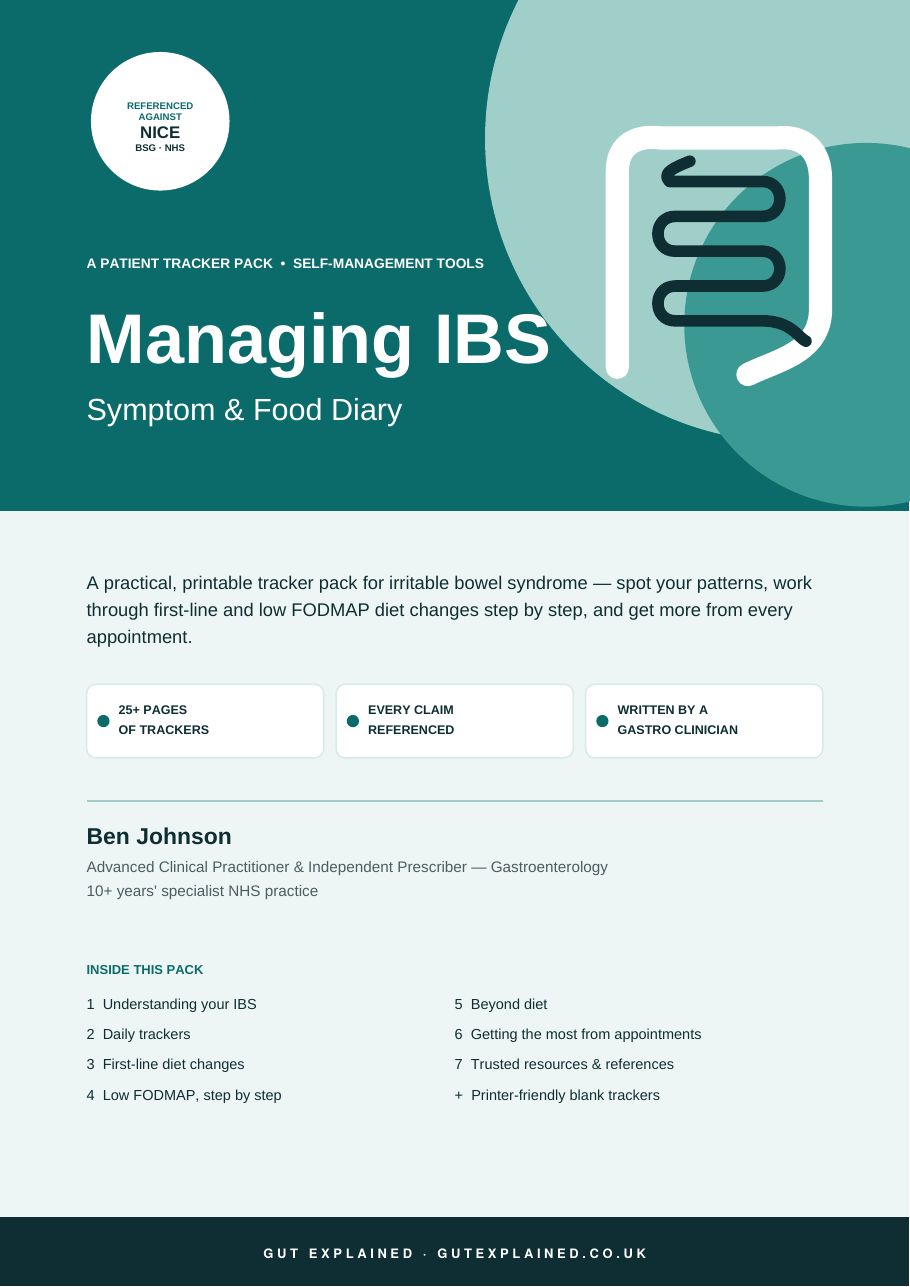
IBS is real, it can be miserable, and there’s more that helps than most people are told. This 63-page tracker pack helps you spot your patterns, work through the first-line diet changes recommended in UK guidance step by step, keep the records your dietitian needs if a low FODMAP trial is suggested, and walk into appointments with clear records instead of a vague memory of the last few weeks.
Is this workbook for you?
- You’ve been diagnosed with IBS, or you’re being investigated for it.
- You’ve been told to “keep a food diary” and want one that’s actually useful.
- Your GP or dietitian has suggested a low FODMAP trial, and you want to keep good records alongside their advice.
- You’re unsure which foods, habits or medicines really make a difference for you.
- You want to get more from appointments with your GP or dietitian.
Look inside
Click any page to see it full size.
What’s inside
| Part | What you’ll learn and do |
|---|---|
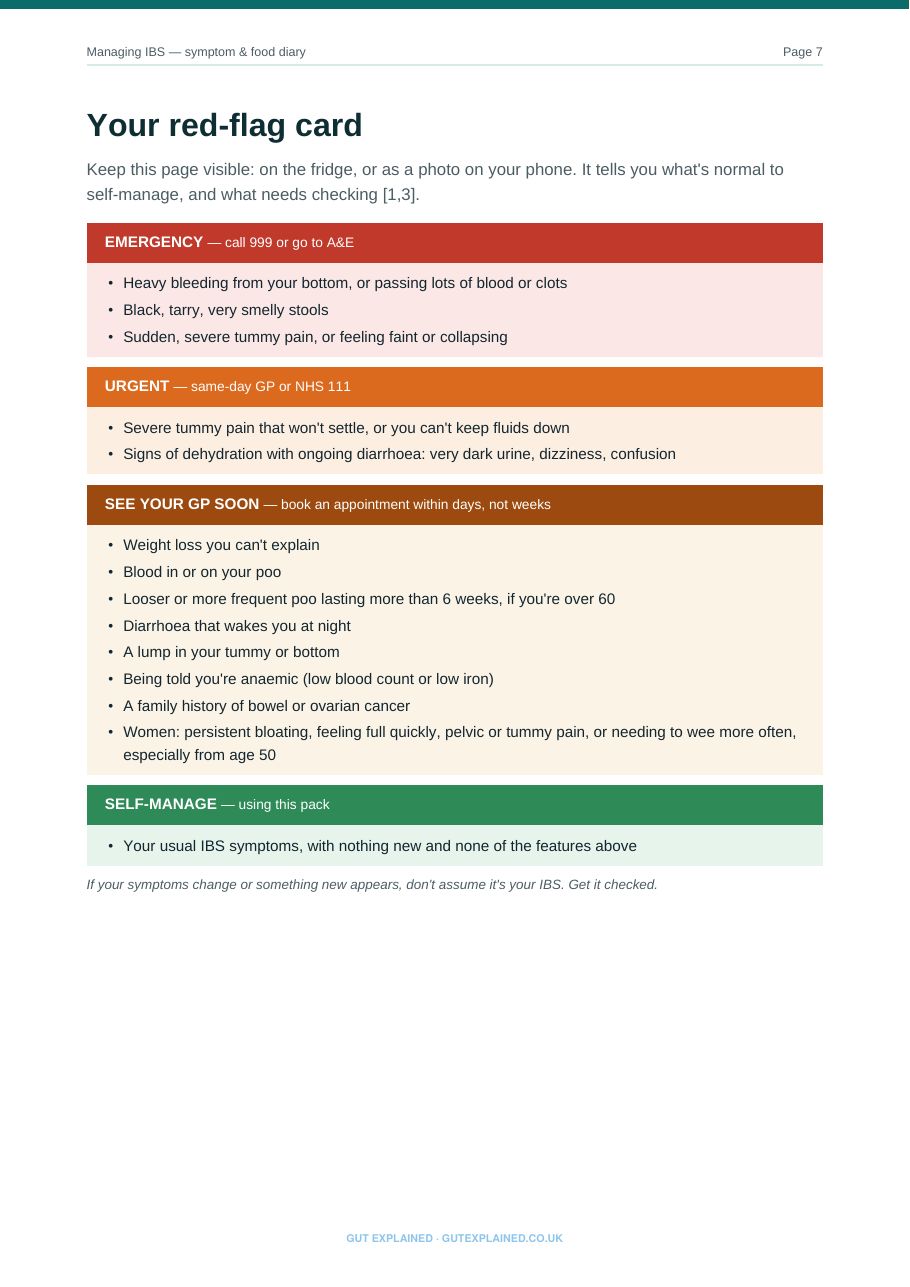
| 1. Understanding your IBS | How IBS is diagnosed, the gut-brain connection, and your red-flag card |
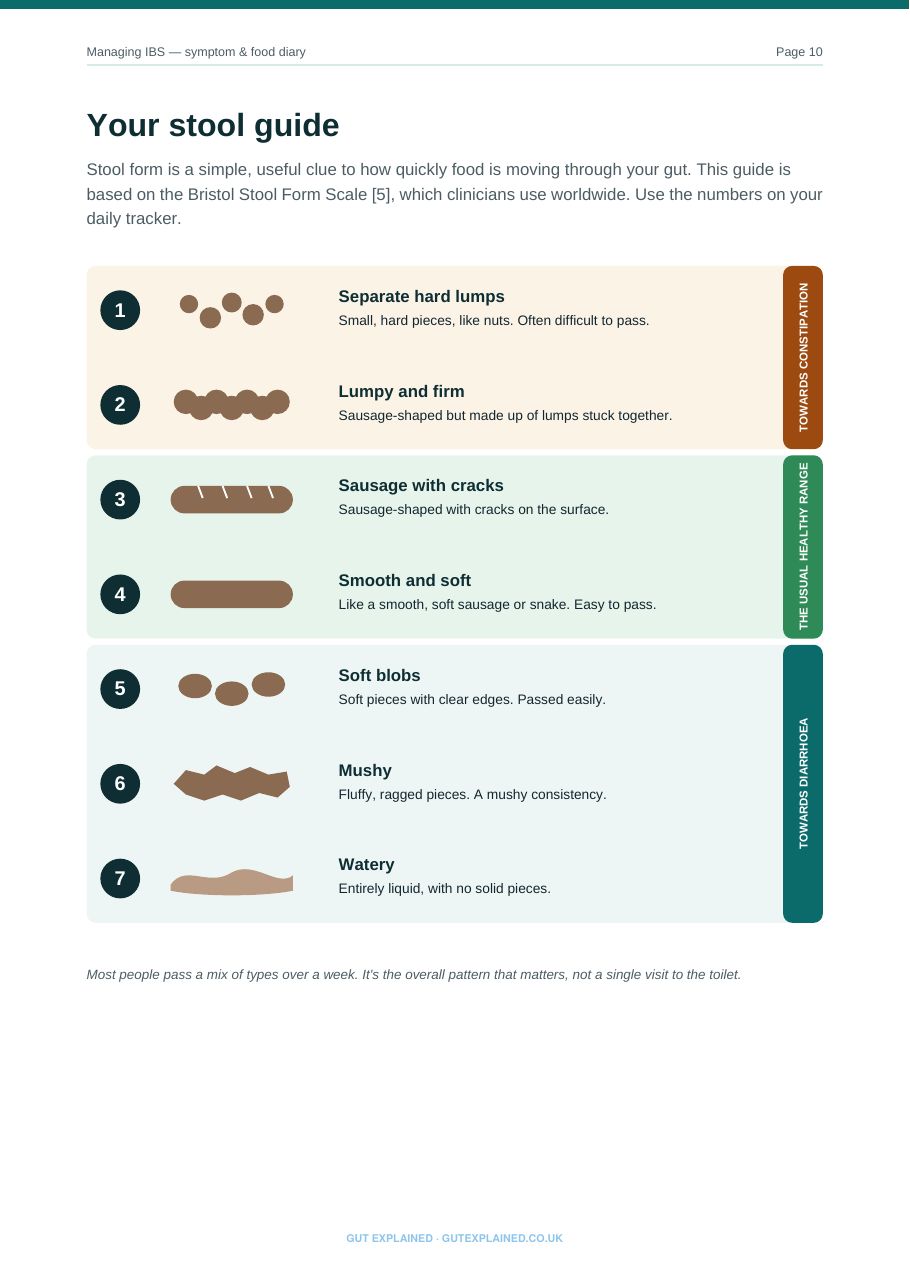
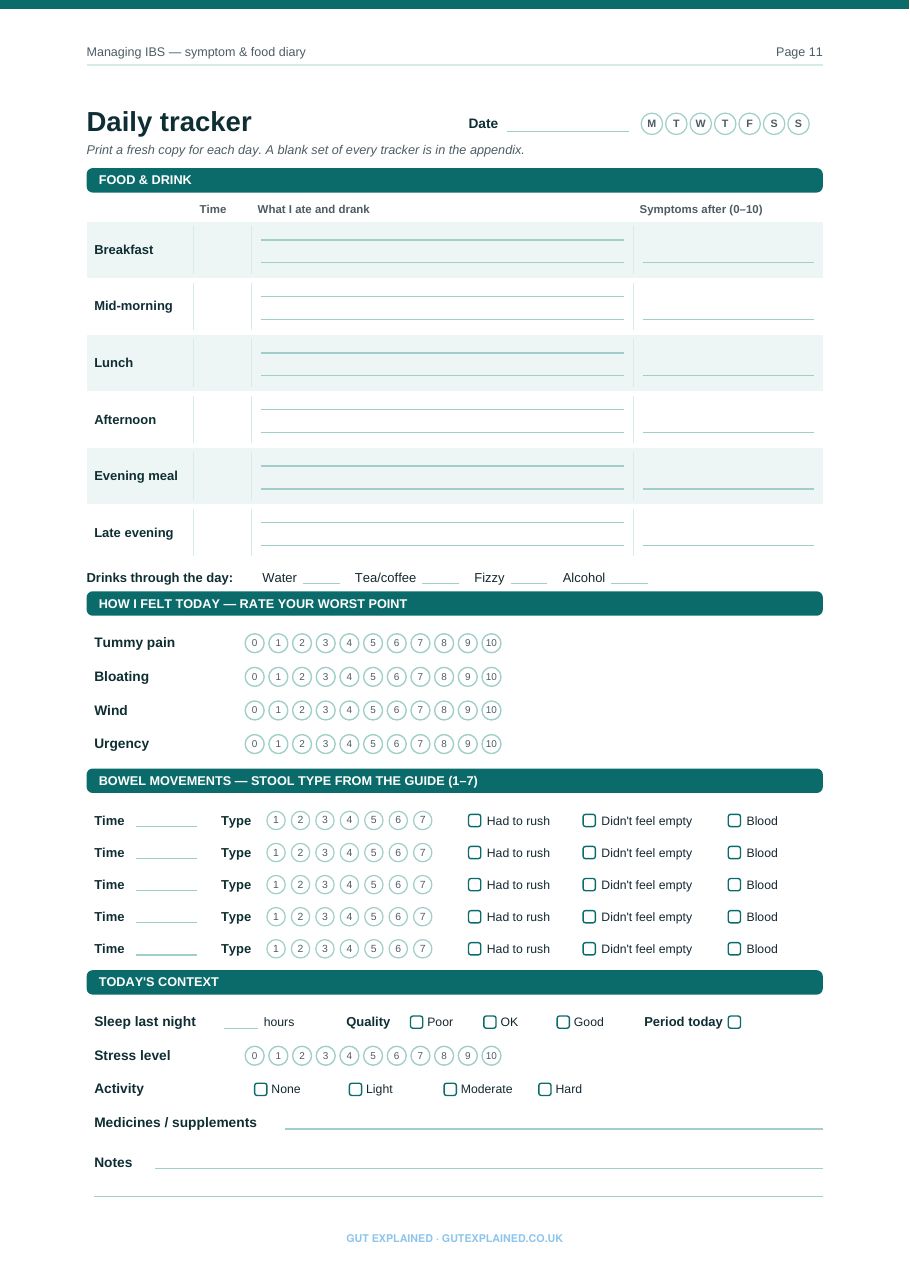
| 2. Your daily trackers | Daily and weekly trackers, a month at a glance, a plain-English stool guide and your suspect list |
| 3. First-line diet changes | The NICE first-line changes, as a 4-week plan you can tick off |
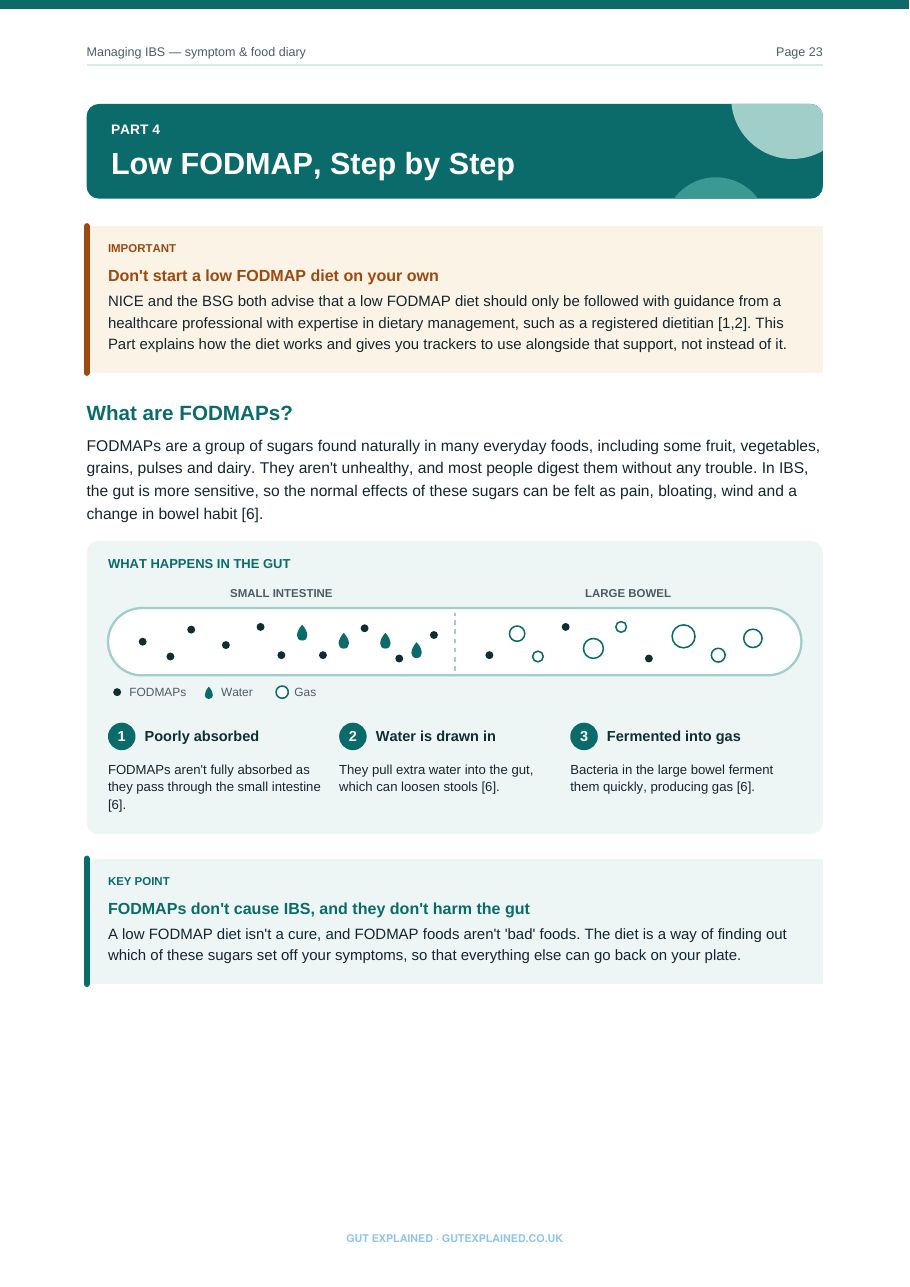
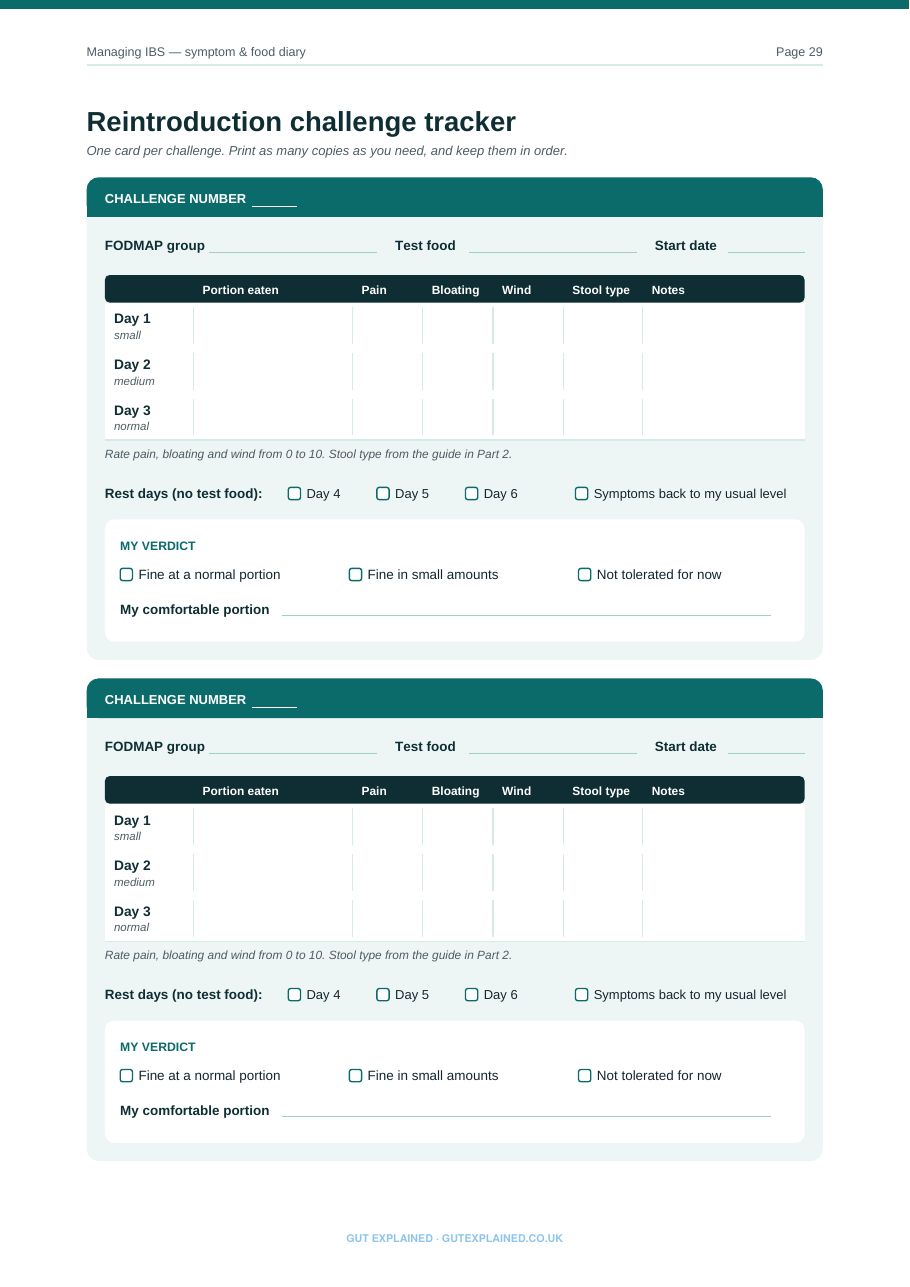
| 4. Low FODMAP, step by step | For use with your dietitian: is it right for you, the three phases, a reintroduction challenge tracker and your personal tolerance list |
| 5. Beyond diet | A flare-up plan, medicines and supplements log, and an activity, sleep and stress week |
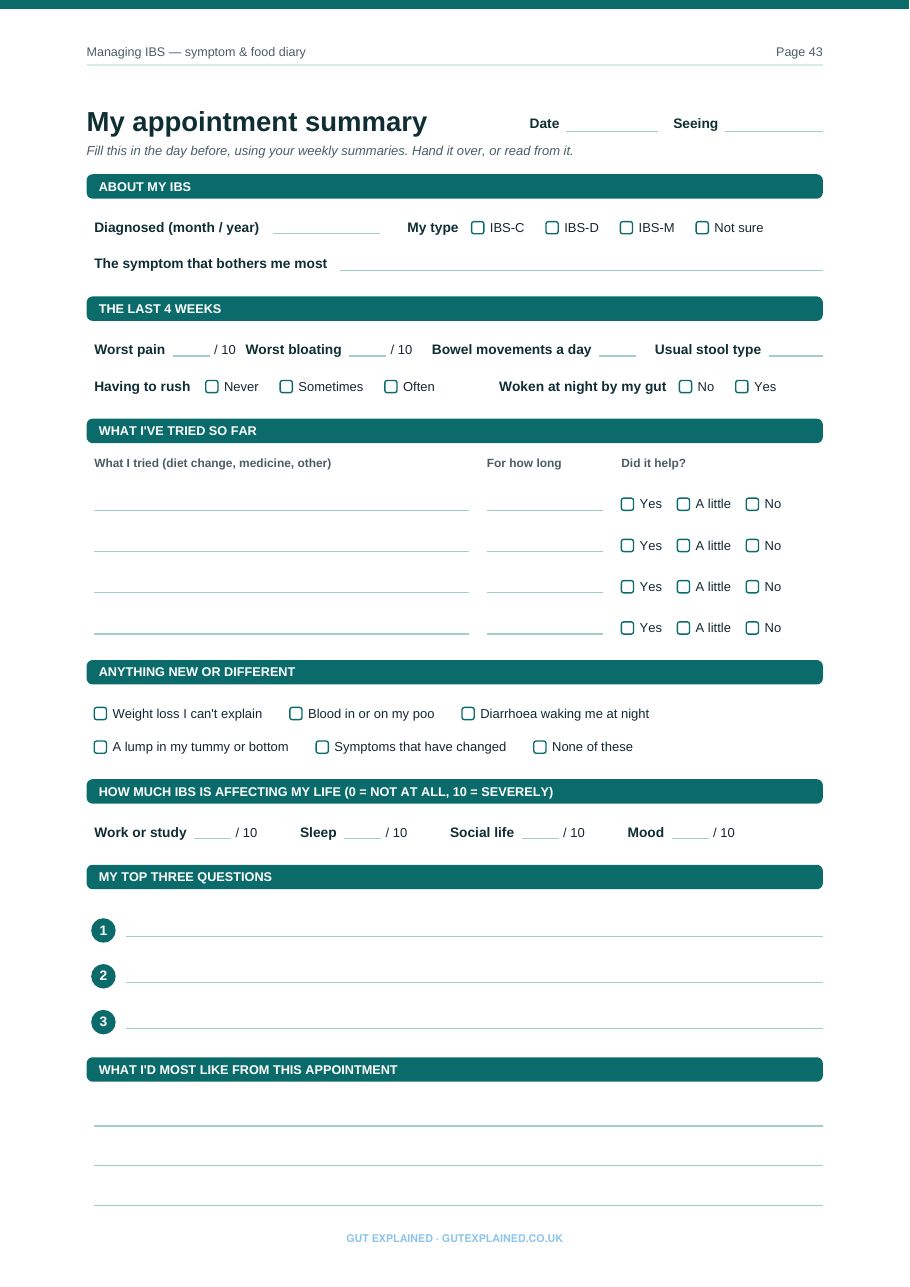
| 6. Getting the most from appointments | An appointment summary, questions worth asking and after-appointment notes |
| 7. Trusted resources | Where to find reliable help, and the full reference list |
| Appendix | Blank trackers to print, including ink-saving versions |
Ready to start?
£7.99
Buy nowSecure checkout. Written by a gastroenterology specialist practitioner and referenced to NICE and BSG guidance.
What makes it different
- Written by a clinician who does this work. Ben Johnson is an NHS Advanced Clinical Practitioner in gastroenterology who performs gastroscopies and prescribes as part of his NHS work.
- Every clinical statement is referenced. Numbered citations link each point to NICE, British Society of Gastroenterology or NHS guidance, or peer-reviewed research, listed in full at the back.
- Built to be used, not just read. Trackers, checklists and appointment pages turn the guidance into things you actually do, and give your GP or specialist a clear picture in minutes.
- Designed to work alongside your dietitian. UK guidance recommends low FODMAP is done with a dietitian’s support, and the pack says so clearly. Its low FODMAP section follows the restrict, reintroduce and personalise approach, and gives your dietitian the records they need.
Why I wrote it
Many people I see have cut out a long list of foods and still feel unwell. I wrote this pack to make the proven steps manageable, one at a time, so you end up eating as widely as possible and know exactly what affects you.
 Ben Johnson
Advanced Clinical Practitioner, Gastroenterology
How it works
- Buy securely and download the PDF straight away.
- Read Part 1, then start the daily tracker for a week before changing anything.
- Work through the diet changes in order, at your own pace.
- Print the trackers you need, as often as you need them.
Frequently asked questions
What format is it?
A PDF you download straight after paying. It works on a phone, tablet or computer, and prints well on A4 at home.
Can I print it more than once?
Yes. Print the trackers as many times as you need for your own use.
Can I share it with a friend?
Please don’t. It’s licensed for your personal use. You’re welcome to share the link to this page.
What if there’s a problem with my download?
Get in touch through the contact page with the email address you used, and we’ll put it right.
Does it replace my doctor?
No. It supports the care you get from your GP, pharmacist or specialist team, and helps you get more from it. It includes a red-flag card so you know when not to wait.
Is the low FODMAP diet for everyone with IBS?
No. It’s a second-line option for when the first-line changes haven’t helped enough, and it should be done with support from a dietitian rather than on your own. The pack helps you prepare for that conversation and record your progress.
Can I use it on a tablet?
Yes, with a PDF app that lets you write or type on pages, such as GoodNotes or Notability. Or print the pages you need.
Get your copy
£7.99
Buy nowSecure checkout. Written by a gastroenterology specialist practitioner and referenced to NICE and BSG guidance.
This workbook supports your usual care. It doesn’t replace advice from your GP, pharmacist or specialist team. If you have any warning signs, such as vomiting blood, black poo, difficulty swallowing or unexplained weight loss, seek medical help promptly.